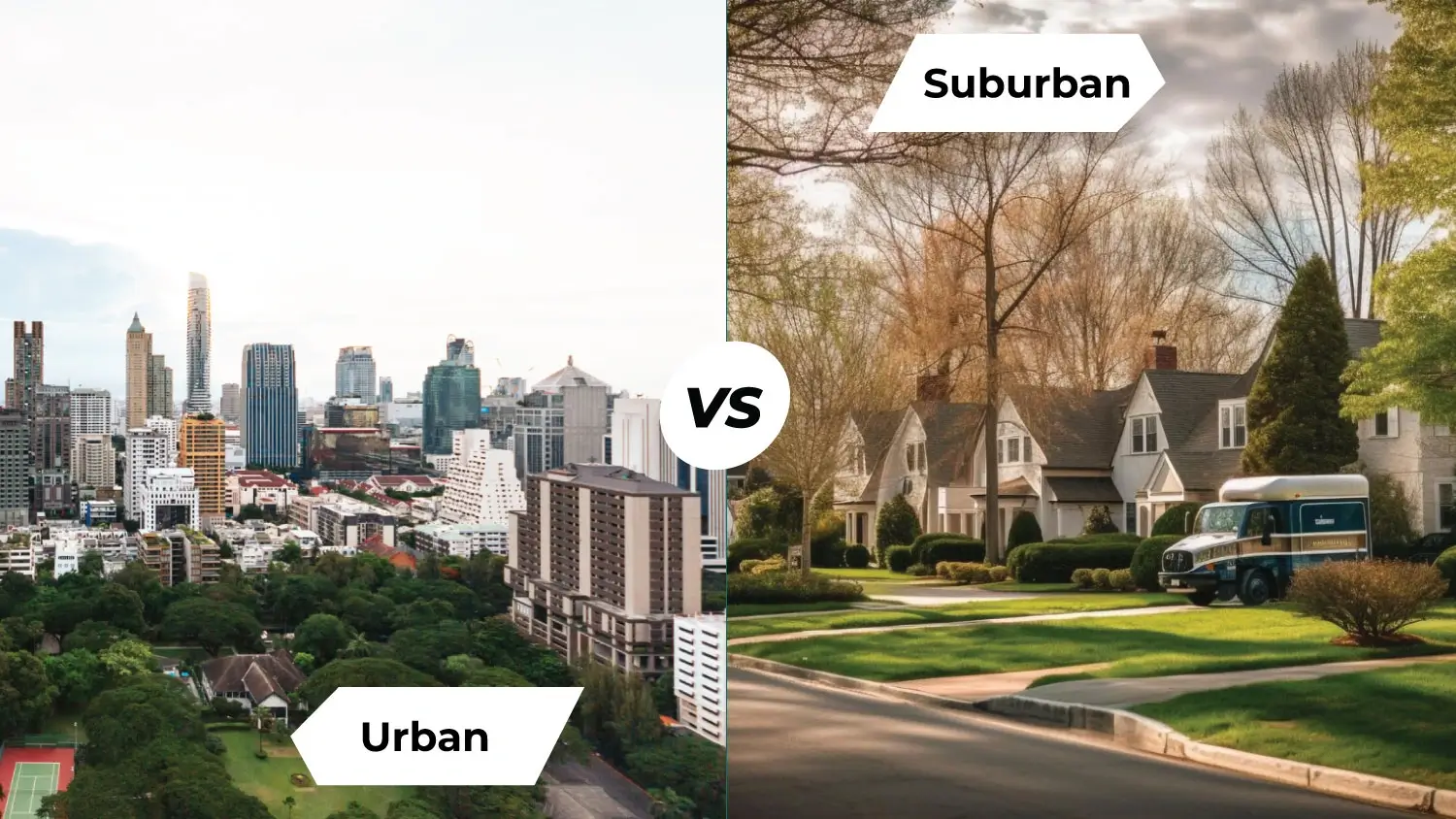
The Great Urban–Suburban Debate
Real estate trends are constantly evolving – and one question continues to shape buyer preferences globally: Should you choose urban or suburban living? From lifestyle priorities and work dynamics to economic factors and generational influences, this choice isn’t just about location – it’s about future-proofing your life and investment.
At Estate Vision 360, we’ve analyzed market data, buyer behavior, and lifestyle indicators to give you a comprehensive comparison. This guide breaks down both living experiences, explores where the real estate market is heading, and helps you make informed decisions.
Defining Urban and Suburban Living
What Is Urban Living?
Urban living refers to life in city centers and densely populated metropolitan areas – think high-rise apartments, 24/7 public transport, diverse cultural hotspots, and close proximity to work and social experiences.
What Is Suburban Living?
Suburban living is about residential neighborhoods outside city cores – larger homes, quieter streets, green spaces, and more family-oriented amenities. Often associated with a slower pace of life, it offers a different set of benefits and trade-offs.
Key Differences Between Urban and Suburban Lifestyles
Housing & Affordability
- Urban: Apartments, condos, vertical living; often higher prices due to scarcity.
- Suburban: More square footage, detached homes, yards – but longer commutes.
Commute and Transportation
- Urban Areas: Public transit, ride-shares, and walkable zones reduce dependency on cars.
- Suburban Areas: Car-centric with fewer transit options; rising demand for better connectivity.
Amenities and Services
- Urban: Immediate access to restaurants, theaters, shops, and nightlife.
- Suburban: Local community centers, parks, and family-friendly facilities.
Community & Culture
Urban settings often offer diversity and dynamism, while suburban neighborhoods emphasize community bonds and tranquility.
Real Estate Market Trends: Urban vs Suburban
The real estate landscape has undergone significant shifts, especially in the last decade.
Post-Pandemic Shifts
The COVID-19 pandemic transformed real estate priorities. Remote work pushed many toward suburban living for space and affordability, while cities began evolving to support flexible workspaces and mixed-use developments.
Millennial & Gen Z Preferences
Millennials and Gen Z buyers are influencing the market like never before. While younger adults value urban conveniences, they also want space – often tilting the scale toward suburban properties that offer both comfort and connectivity.
Work-From-Home’s Role
WFH is no longer temporary – it’s reshaping preferences:
- Urban condos with dedicated workspace options
- Suburban homes with office rooms and outdoor areas
This has led to increased demand in both sectors, but for different reasons.
Technology and Connectivity
High-speed internet, smart home tech, and digital amenities level the playing field – whether in a city loft or suburban house.
Sustainability & Green Living
Eco-friendly design and green infrastructure are trending in both segments. Urban centers are introducing walkable neighborhoods and eco-districts, while suburbs invest in electric vehicle infrastructure and green spaces.
Economic and Investment Perspectives
Property Value Growth
Traditionally, urban properties appreciated faster due to demand pressure. However, suburban areas are now seeing strong value growth, driven by:
- Increased buyer interest
- Infrastructure expansion
- Remote work adaptability
Rental Market Dynamics
Urban rentals continue to thrive due to job centers and students, while suburban rentals benefit from families and young professionals seeking comfort.
Commercial Expansion
Mixed-use suburban developments – incorporating retail, offices, and residential spaces – are blurring the lines between urban and suburban markets.
Challenges in Urban and Suburban Real Estate
Urban Overcrowding & Costs
- Higher living costs
- Congestion
- Limited space
Suburban Infrastructure & Accessibility
- Dependence on vehicles
- Longer commutes
- Need for more public transit options
These challenges influence buyer decisions – and real estate innovations aim to address them.
Where Is the Market Heading? Predicted Trends
Real estate experts at Estate Vision 360 see several future trajectories:
Hybrid Neighborhoods
Urban cores and suburbs are converging. Think suburban downtowns and urban-style townhouses – blending the best of both worlds.
Transit-Oriented Development
Investment in transit corridors is increasing property value in areas previously considered remote.
Smart Cities & Smart Suburbs
Integrated technology for safety, convenience, and sustainability will define future communities.
Micro-Urbanization
Smaller urban centers are rising in popularity – offering urban amenities with suburban affordability.
How to Decide What’s Best for You
Personal Lifestyle Checklist
Ask yourself:
- Do I value proximity to work and entertainment?
- How important is outdoor space?
- What’s my ideal commute time?
- Am I planning for a family?
Your answers help define whether urban or suburban living aligns with your goals.
Affordability and Budget Planning
Budget shapes choice – city living may mean higher costs for smaller spaces, while suburbs offer more space but added transport expenses.
Long-Term Investment Goals
Think 5–10 years ahead:
- Urban properties may yield stronger rental income
- Suburban homes may offer long-term capital growth
Why Realtors Matter: Role of Estate Vision 360
Deciding between urban and suburban living isn’t just about preference – it’s about strategy. That’s where Estate Vision 360 comes in.
We help buyers:
- Understand neighborhood trends
- Compare investment potential
- Navigate financing options
- Personalize property searches based on lifestyle goals
With deep market insights and a future-forward approach, we guide buyers through every step – from exploration to closing.
Conclusion: Choosing Your Next Home
The future of living doesn’t belong strictly to cities or suburbs – it belongs to a spectrum of possibilities. The real estate market continues to evolve, blending lifestyles, integrating technology, and responding to cultural and economic shifts. Whether you’re drawn to the energy of urban centers or the tranquility of suburbs, being informed empowers your decision.
At Estate Vision 360, we believe the right home is where opportunity meets lifestyle. The market is dynamic – but your choice can be confident, strategic, and future-ready.
FAQs
Is suburban living more affordable than urban living?
In many markets, suburbs offer more space and lower price per square foot. However, affordability depends on local taxes, transport costs, and amenities.
Are urban homes a better investment than suburban homes?
Not necessarily. Urban homes may appreciate faster in high-growth cities, but suburbs now show strong value growth due to changing demand patterns.
Is the demand for urban living declining?
Urban living is evolving – not declining. Many buyers still seek city convenience, especially professionals and young adults. The trend is toward smart urban designs and mixed-use developments.
How has work-from-home influenced housing trends?
Remote work increased demand for larger homes with dedicated office spaces, benefiting suburbs. Yet urban properties with flexible spaces also remain appealing.
Are real estate trends different for investors and homeowners?
Yes. Investors may focus on rental yield and resale value, while homeowners prioritize lifestyle, comfort, and proximity to services.
What role does transportation play in choosing between urban and suburban living?
Transportation is a major factor. Urban locations offer public transit and walkability, whereas suburbs often require car travel – though this gap is narrowing with transit expansion.