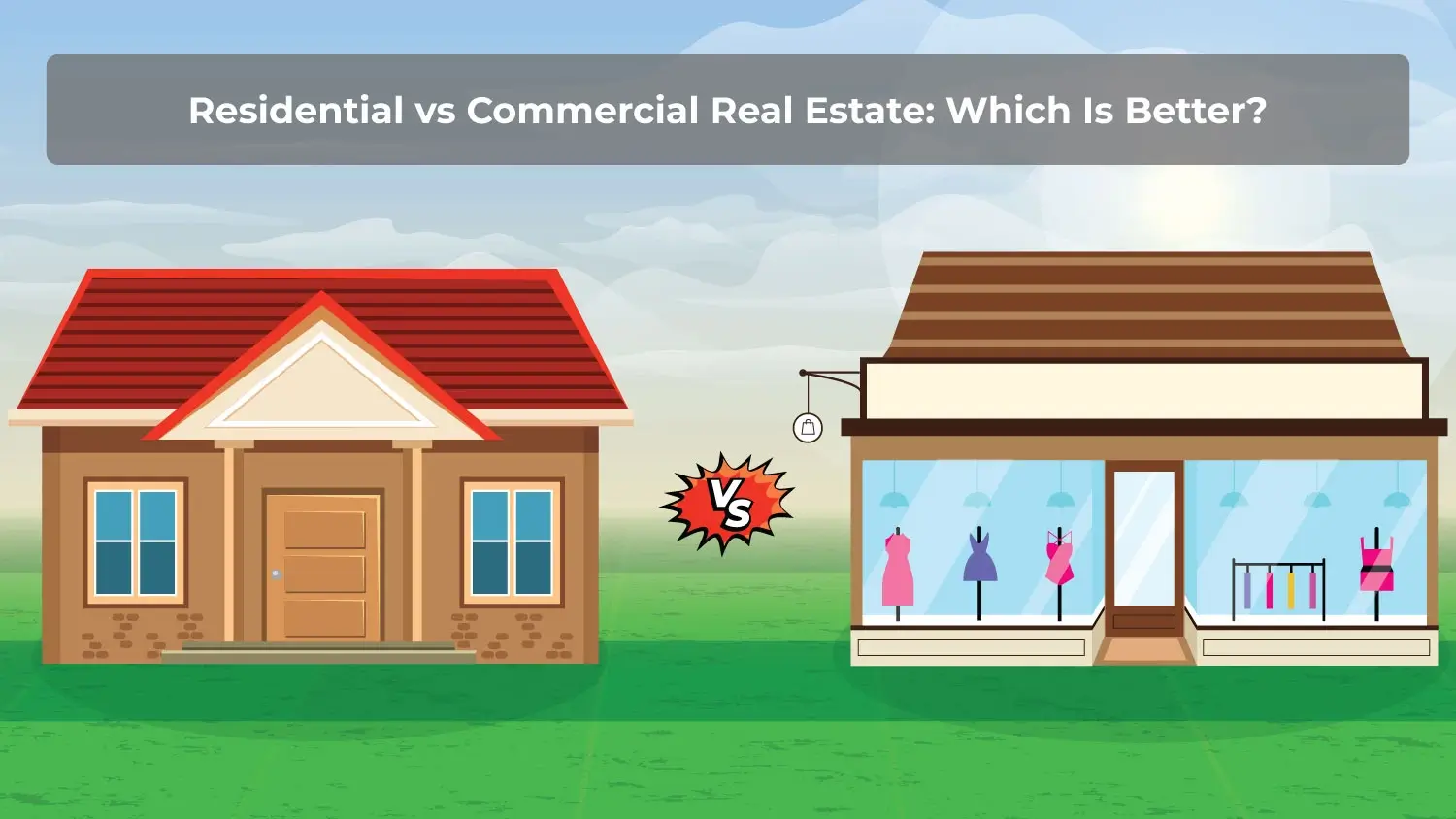
The real estate market has always been one of the most reliable wealth-building avenues, yet one question continues to puzzle investors, developers, and even first-time buyers: Residential vs Commercial Real Estate-Which is better?
The answer isn’t one-size-fits-all. It depends on capital, risk tolerance, market knowledge, and long-term goals. As real estate continues to evolve with changing lifestyles, business models, and economic cycles, understanding the strengths and challenges of each segment has become more important than ever.
In this in-depth guide by Estate Vision 360, we break down residential and commercial real estate from every angle-returns, risks, management, scalability, and future trends-so you can make a confident, informed decision.
Residential and Commercial Real Estate
Real estate is no longer just about owning land or buildings-it’s about strategy, timing, and adaptability. Rapid urbanization, remote work culture, e-commerce growth, and changing consumer behavior are reshaping property demand worldwide.
Residential and commercial real estate serve different purposes but are deeply interconnected within the broader property ecosystem. Choosing between them requires a clear understanding of how each performs in both stable and uncertain economic climates.
What Is Residential Real Estate?
Residential real estate includes properties designed primarily for people to live in. These properties form the backbone of housing markets and are often driven by population growth, income levels, and lifestyle preferences.
Common Types of Residential Properties:
- Apartments and flats
- Independent houses and villas
- Duplexes and townhouses
- Residential plots
- Multi-family homes
Key Characteristics:
- Shorter lease terms (usually 11–12 months)
- Emotional buying decisions often play a role
- Demand remains relatively consistent due to basic housing needs
Residential real estate is often the first entry point for new investors because it’s easier to understand and manage.
What Is Commercial Real Estate?
Commercial real estate refers to properties used for business or income-generating activities. These properties are valued based on their earning potential rather than emotional appeal.
Common Types of Commercial Properties:
- Office buildings
- Retail shops and malls
- Warehouses and logistics parks
- Hotels and hospitality properties
- Co-working spaces
Key Characteristics:
- Longer lease agreements (3–15 years)
- Higher rental yields compared to residential
- Performance closely linked to economic and business cycles
Commercial real estate is often preferred by seasoned investors seeking stable cash flow and portfolio diversification.
Key Differences Between Residential and Commercial Real Estate
Understanding the core differences helps investors align their strategy with their financial goals.
| Aspect | Residential Real Estate | Commercial Real Estate |
|---|---|---|
| Purpose | Living | Business & income |
| Lease Duration | Short-term | Long-term |
| Entry Cost | Lower | Higher |
| Rental Yield | Moderate | High |
| Risk Level | Lower | Moderate to High |
| Management | Simpler | More complex |
Investment Returns: Which Offers Better Profit Potential?
Residential Returns
Residential properties typically offer:
- Steady rental income
- Moderate appreciation over time
- Lower vacancy risks
However, rental yields are often capped due to affordability limits.
Commercial Returns
Commercial properties generally deliver:
- Higher rental yields
- Long-term income stability
- Better scalability
That said, returns are heavily dependent on tenant quality and location.
Verdict:
- For steady, predictable growth → Residential
- For higher income potential → Commercial
Risk Factors and Market Volatility
Every real estate investment carries risk, but the nature of risk differs.
Residential Risks:
- Tenant turnover
- Rental caps in regulated markets
- Maintenance costs
Commercial Risks:
- Business downturns affecting tenants
- Longer vacancy periods
- Economic sensitivity
During uncertain times, residential real estate often proves more resilient, while commercial real estate performs better during economic expansion phases.
Financing and Entry Barriers
Residential Financing:
- Easier loan approvals
- Lower interest rates
- Wider lender options
Commercial Financing:
- Higher down payments
- Stricter eligibility criteria
- Higher interest rates
For investors with limited capital, residential real estate remains more accessible.
Management and Operational Complexity
Residential Management:
- Handling tenants
- Routine maintenance
- Annual lease renewals
Commercial Management:
- Lease negotiations
- Compliance and zoning regulations
- Facility and asset management
Commercial properties often require professional management, increasing operational costs but also reducing personal involvement.
Taxation and Legal Considerations
Tax laws and regulations differ significantly between residential and commercial properties.
- Residential properties often enjoy tax benefits for home loans and depreciation.
- Commercial properties may offer higher depreciation benefits but come with complex compliance requirements.
Consulting professionals and staying updated with policy changes is essential in both cases.
The Impact of Ever-Evolving Real Estate Trends
The real estate market is constantly evolving, shaped by technology, sustainability, and changing consumer behavior.
Key Trends Influencing Both Segments:
- Smart homes and green buildings
- Co-living and co-working spaces
- Rise of mixed-use developments
- Increased focus on ESG (Environmental, Social, Governance)
Platforms like Estate Vision 360 closely track these shifts, helping investors stay ahead in an ever-changing market landscape.
Which Is Better for Beginners vs Experienced Investors?
Beginners:
- Lower risk appetite
- Limited capital
- Preference for simplicity
Best Fit: Residential real estate
Experienced Investors:
- Higher capital availability
- Strong market understanding
- Desire for higher yields
Best Fit: Commercial real estate
Residential vs Commercial Real Estate: A Quick Comparison
Choose Residential If You Want:
- Stable demand
- Lower investment risk
- Easier management
Choose Commercial If You Want:
- Higher rental income
- Long-term leases
- Portfolio diversification
Final Verdict: Which Should You Choose?
There is no universal winner in the residential vs commercial real estate debate. The “better” option depends on your goals, resources, and market timing.
- If you value stability, simplicity, and long-term appreciation, residential real estate is a solid choice.
- If you seek higher cash flow, professional tenants, and scalable growth, commercial real estate may offer greater rewards.
As real estate continues to evolve, informed decisions backed by market insights remain the true key to success.
FAQs
Is residential real estate safer than commercial real estate?
Yes, residential real estate is generally considered safer due to consistent housing demand and lower vacancy risks.
Which real estate type offers higher rental income?
Commercial real estate typically provides higher rental yields compared to residential properties.
Can beginners invest in commercial real estate?
Yes, but it requires higher capital, stronger financial planning, and professional guidance.
How do economic downturns affect these investments?
Residential properties tend to remain stable, while commercial properties are more sensitive to economic cycles.
Is long-term appreciation better in residential or commercial real estate?
Residential real estate often shows steady appreciation, while commercial appreciation depends heavily on income performance and location.